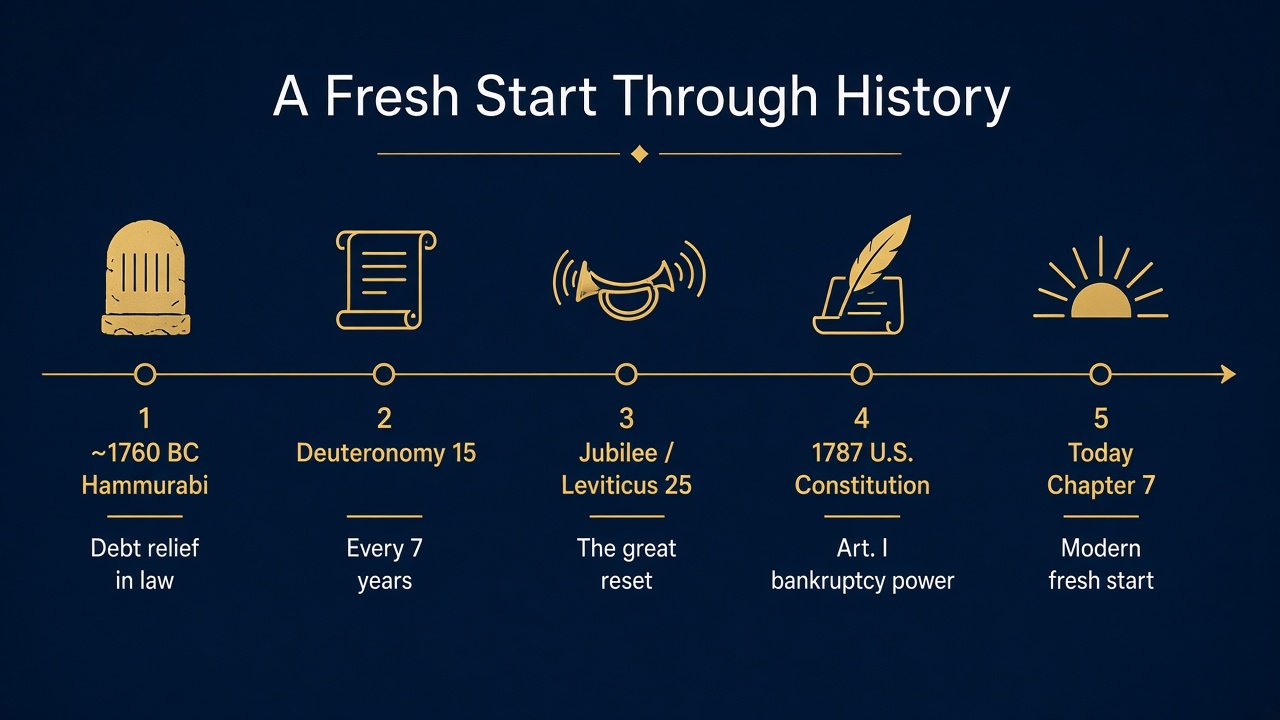
Chapter 7 Bankruptcy in Michigan: How to Get a Real Fresh Start

Chapter 7 is the most common path to a fresh start in Michigan.

If credit cards, medical bills, collection lawsuits, or a wage garnishment have taken over your budget, you may already feel like there is no way out. There is. For many people, Chapter 7 permanently clears qualifying unsecured debt and stops most creditor collection so you can rebuild.

Moran Law helps Michigan residents file Chapter 7 without an unnecessary office visit. We serve clients statewide by phone and video from our Royal Oak and Flint offices. In the last 20 years, our bankruptcy attorneys have helped over 15,000 clients in Michigan get the fresh start they deserve.

Call 866-473-1996 for a free consultation.

What Chapter 7 bankruptcy actually does

Chapter 7 is often called a fresh-start or straight bankruptcy. In a typical case, qualifying unsecured debts can be discharged — wiped out permanently — so you are no longer personally liable for them.

Debts Chapter 7 often addresses include credit card balances, medical bills, many lawsuit judgments, repossession deficiencies, and certain older personal loans and collection accounts.

Chapter 7 also triggers the automatic stay when the case is filed. That court protection generally stops wage garnishment, collection calls, letters, and most lawsuits while your case moves forward.

Chapter 7 is not a punishment. For many hardworking people, it is a legal process for dealing with debt that has become unmanageable and starting a more stable financial future.

Who Chapter 7 is for (and who may need another path)

Chapter 7 is often a strong fit when most of your problem debt is unsecured, you need relief from garnishment or aggressive collection, you want a faster fresh start (many cases finish in about three to six months), or you can keep essential property under Michigan exemptions.

Chapter 7 is not automatically right for everyone. Eligibility depends on income, household size, recent financial history, assets, prior bankruptcies, and the type of debt. Some debts — such as most recent tax debts, student loans in many cases, and domestic support obligations — are treated differently and may not discharge.

If catching up on a home or car through a court-approved repayment plan is the better fit, Chapter 13 may be discussed. Moran Law focuses on Chapter 7 and garnishment relief. If a new Chapter 13 filing is the right direction, we will say so honestly on your consult and help with intake or referral when that is best.

You do not need to decide the chapter alone. That is what the free consultation is for.

What happens in a Michigan Chapter 7 case

Most Chapter 7 cases follow a clear sequence: free consultation; documents; credit counseling; petition filed; 341 meeting; debtor education; and discharge. A Moran Law attorney helps you prepare throughout the process.

Many people complete the process in roughly three to six months. Timing varies by case.

Chapter 7 and wage garnishment

If a creditor is taking money from your paycheck, filing Chapter 7 usually stops that garnishment through the automatic stay. Payroll may need a short time to process the release, so getting advice before the next paycheck matters.

Read our guide: Stop Wage Garnishment in Michigan — https://www.michiganbankruptcyfirm.com/blog/stop-wage-garnishment-michigan

Myths that keep people stuck

“I will lose everything. Michigan exemptions protect many essentials for eligible filers. The consultation is where we review what you can keep.

“Bankruptcy ruins my future forever.” A discharge can remove the debt that is holding you back. Credit rebuilding starts after the case, and many people regain footing faster once the old balances are gone.

“I have to visit an office.” Most Moran Law Chapter 7 clients complete the process by phone and video. Offices in Royal Oak and Flint are available when needed.

“I should wait until it gets worse.” Waiting rarely helps when garnishment, lawsuits, or interest are already running. Early advice often preserves more options.

Why Michigan clients choose Moran Law for Chapter 7

Fresh-start focus — We help you understand whether Chapter 7 can clear the debt holding you back.

Statewide service — Royal Oak and Flint offices, plus phone and video anywhere in Michigan.

Clear process — Documents, filing, the 341 meeting, and discharge explained in plain language.

Garnishment experience — Straight answers on what the automatic stay can stop and what payroll still needs to do.

No pressure consult — Call 866-473-1996. No office visit required to start.

Take the first step toward a fresh start

You do not need a perfect plan before you call. You need accurate information about whether Chapter 7 fits your situation and what a realistic next step looks like.

Call 866-473-1996 or request a free consultation at https://www.michiganbankruptcyfirm.com.

For more information, visit our Chapter 7 service page: https://www.michiganbankruptcyfirm.com/solutions-financial-challenges/chapter-7-bankruptcy

Moran Law — Michigan bankruptcy attorneys helping good people through bad times.

FAQ

Is Chapter 7 the same as a fresh start?

For many people, yes. Chapter 7 is the most common fresh-start bankruptcy because it can permanently discharge qualifying unsecured debts.

Can Chapter 7 stop wage garnishment in Michigan?

In most cases, filing triggers an automatic stay that stops wage garnishment and much of the creditor’s collection activity. Payroll may need a short time to process the stop.

Do I have to go to court in person?

You will have a 341 meeting with the trustee. We prepare you for it and attend with you. Most other work can be done by phone and video.

How long does Chapter 7 take in Michigan?

Many cases finish in about three to six months, depending on the facts of the case.

What if Chapter 13 is a better fit?

We will explain that honestly. Moran Law focuses on Chapter 7; for new Chapter 13 filings we help with intake or referral when that is the right next step.

Stop Wage Garnishment in Michigan: How Bankruptcy Gives You Your Paycheck Back

Wage garnishment is often the breaking point.

When money was already tight, watching a chunk of your paycheck disappear before you ever see it can feel impossible. You are not alone — and you do not have to stay stuck.

At Moran Law, we help Michigan residents stop wage garnishment and get a real fresh start. Whether you are in Royal Oak, Flint, Detroit, or anywhere else in the state, we can usually help you fight back without an office visit.

Call 866-473-1996 for a free consultation.

What wage garnishment does to your finances

Your ability to earn is your financial power. When a creditor takes that income at the source, everyday bills become harder overnight — rent, groceries, gas, childcare.

Many people only call a bankruptcy attorney after a garnishment starts. That is common. A garnishment is a clear signal that collection has moved past letters and calls into your paycheck.

The good news: in most bankruptcy cases, garnishment can stop.

How bankruptcy stops wage garnishment in Michigan

When we file your bankruptcy case with the court, an automatic stay goes into effect. That court protection freezes most collection activity, including:

Creditor calls and letters

Lawsuits

Wage garnishment

That stay is one of the strongest tools available to people who need breathing room. Stopping the garnishment gives you your paycheck back so you can cover living expenses and start rebuilding.

Learn more on our wage garnishment page: https://www.michiganbankruptcyfirm.com/financial-challenges/wage-garnishment/

We help people across Michigan — including Detroit, Wayne County, Flint, Royal Oak, and statewide by phone or video — stop garnishments, often with flexible payment options that can start as little as $0 down.

Chapter 7 vs. Chapter 13 when you are being garnished

Chapter 7 (often called a fresh-start or straight bankruptcy) is the most common path for people overwhelmed by unsecured debt such as credit cards, medical bills, and many judgments that lead to garnishment. In a typical Chapter 7, qualifying debts can be wiped out permanently, and the process usually finishes in a matter of months — not years. Learn more about Chapter 7 bankruptcy: https://www.michiganbankruptcyfirm.com/solutions-financial-challenges/chapter-7-bankruptcy

Chapter 13 can also stop garnishment through the automatic stay. It is a repayment-plan chapter for people who need that structure. If Chapter 13 is the better fit for your situation, we will talk through it honestly on the consult and help you take the next step (including referral when that is the right move for a new Chapter 13 filing).

You do not need to decide the chapter alone. That is what the free consultation is for.

What happens to money taken after you file

Payroll departments sometimes keep withholding for a short time until they receive the garnishment release paperwork. That does not mean the case failed.

Here is the practical timeline clients often see after filing:

  1. Notice of filing — As soon as the case is filed, notice goes to the creditors garnishment attorney so they can start stopping the wage deduction.

  2. 2. Garnishment release — On average, the release paperwork is filed about 5–15 business days after notice (timing varies by creditor and court). After court processing, the release goes to the creditor, their attorney, and your payroll.

  3. 3. If a paycheck is still garnished after filing — Do not panic. Many payrolls continue until they receive the release. Funds taken after filing can often be addressed; keep pay stubs that show the post-filing garnishments so the amounts are clear.

If you are still being garnished after your filing date, contact the office right away at 248-246-6536 (or reply in your client portal) so we can follow up.

Why people choose Moran Law for garnishment cases

  • Fresh start focus — Bankruptcy is the start of your new financial future. We are not in the business of repeat customers.

  • - Statewide help — Royal Oak and Flint offices, plus virtual and phone services across Michigan.

  • - Experience that levels the field Credit card companies and collection networks have resources. Our job is to put experienced counsel on your side.

  • - Clear next step Free consultation. No office visit required to get started.

Take the first step today

If a wage garnishment is draining your paycheck, waiting rarely makes it easier. The sooner we talk, the sooner we can work to stop the bleeding and map a path to a fresh start.

Call 866-473-1996 or request a free consultation online at michiganbankruptcyfirm.com.

Moran Law — Michigan bankruptcy attorneys helping good people through bad times.

Bankruptcy Filing: A Solution for Your Medical Debts?

An unexpected or serious illness can lead to high medical bills, and health insurance may not cover all of these costs. A study published in the American Journal of Public Health found that medical issues contributed to 66.5% of all bankruptcies in the U.S. (This was a 2019 study, and the situation may have changed somewhat since then). As healthcare costs continue to soar, a growing number of individuals are exploring the option of bankruptcy to manage or even eliminate their medical debt. The two main avenues for this are Chapter 7 and Chapter 13 bankruptcy. Here's how they can assist:

Medical Debt and Chapter 7 Bankruptcy: Filing a Chapter 7 bankruptcy will effectively eliminate all your medical debt. There is no ceiling or floor on the amount, and this is a debt you won't need to repay. To be eligible for Chapter 7, you must pass a means test, which examines your income and expenditures. It's important to remember that you must continue to cover your health insurance costs throughout and following a Chapter 7 bankruptcy. However, your medical debt could be entirely discharged post-bankruptcy. If you're struggling to pay your medical debt, or if you’re being harassed by medical debt collectors, then Chapter 7 might be the right path for you.

Medical Debt and Chapter 13 Bankruptcy: By filing a Chapter 13, your debt and bills are consolidated and a portion of your medical bills (as little as 1%) will likely need to be paid; however, any unpaid medical debt (up to 99%) gets discharged at the completion of your Chapter 13 plan. As with Chapter 7, eligibility for Chapter 13 depends on several factors, including your income, debt, living expenses, equity, and assets. Unlike Chapter 7, your total medical debt when filing Chapter 13 must be less than $465,275. If your total medical debt falls below this threshold, you may be able to have the vast majority of your medical debt discharged while repaying only a small part of it.

If you're grappling with medical debt and considering bankruptcy but are unsure of which Chapter would work best, reach out to us at (866) 473-1996 for a free initial consultation.

READ THE FULL ARTICLE

Can My Car Be Repossessed During Bankruptcy?

Can My Car Be Repossessed During Bankruptcy?

Various individuals have a common question: Can my car be repossessed during bankruptcy? However, in most cases, an individual's car will not be touched even if a person owes payments on it. Filing for Chapter 13 bankruptcy in Michigan prevents creditors from collecting a car due to the automatic stay, which prevents a car loan lender from repossessing an individual's car.

Michigan Statute of Limitations On Debt

In the state of Michigan, there is a statute of limitations on debt. But many debt collectors and creditors seem to forget about this or illegally pursue old debts knowingly.

Official Statute of Limitation on Debt in Michigan

The statute of limitations on debt in Michigan varies depending on the type of debt, however, the statute of limitations for customer debt in Michigan is six years. This is applicable to all four types of contracts including:

  • Written contracts (signed documents)

  • Oral contracts (verbal agreements)

  • Open-ended accounts (credit cards)

  • Promissory notes

Understanding the Statute of Limitations on Debt

There is a lot of confusion regarding the statute of limitations. It is important to understand that the statute doesn’t necessarily stop a person from trying to collect his or her debt from you. It just means they can’t pursue the existing debt through a court process.

After the statute of limitations has lapsed, creditors and debt collectors can still pursue the debt in the following ways:

  • Send you a correspondence

  • Contact you through a phone call

  • Give your information to credit reporting agencies

In other words, they are legally barred from harassing you but they are still allowed to try and collect their debts.

The lifecycle of a debt

When you fail to pay a debt as agreed, the creditor or debt collector will attempt to sue you for the amount owed. They will start by contacting you and if you pay some amount, the terms are renewed.

But if you don’t make any payment, the lender or debt collector will try to seek a court judgment. This can result in garnished wages. In Michigan, the statute of limitations is six years, meaning, the creditor generally has up to six years to file the lawsuit and recover a debt.

Judgments on debt

If the debt collector manages to obtain a court judgment, then the statute of limitations resets. They will have up to 10 years to collect. This can be through wage garnishing or any other way. Within the 10-year duration, the lender can decide to renew the judgment and again increase the timeframe to collect the debt from you.

Time-barred debts

A time-barred debt is a debt that has exceeded the statute of limitations. This can be your legal standing in case a collector tries to sue you after the statute of limitation has passed.

What you can do

  • Avoid debts whose contractual terms are unclear

  • Don’t ignore letters from the court

  • Avoid speaking to the debt collector without your attorney

Protect Yourself from Creditor Harassment

At Moran Law, we are experienced in protecting you against creditor harassment. Michigan state and federal laws can protect you from debt collection tactics. If you are being harassed with telephone calls or threatened with legal action, our Michigan bankruptcy attorneys can help. 

Life After Chapter 7 Bankruptcy: What You Should Know

Filing for a chapter 7 bankruptcy can give you a fresh start. However, many people find that life after chapter 7 bankruptcy isn’t what they thought it would be. After a chapter 7 discharge, many people may have issues trying to figure out how to manage their money or struggle to buy a house or a car. 

If you have found yourself in this situation, there’s a lot to know about recovering from chapter 7 bankruptcy. Here are 3 things to keep in mind for life after a chapter 7 discharge.

You Need To Create A Thorough Budget

Many people find that they have to file for bankruptcy because of their spending habits. Even if you had to file for bankruptcy due to things like medical debt, divorce, or unemployment, you can still benefit from creating a thorough budget after a Chapter 7 discharge. Don’t go on a spending spree just because many of your debts were wiped out. 

Take a thorough look at your bills and income so that you can figure out how much money you have leftover every single month. It’s also a good idea to put as much money as possible into a savings account. This will allow you to have the necessary funds needed when unexpected expenses occur.

Building Up Your Credit Score May Take Some Time

When it comes to adjusting to life after a chapter 7 bankruptcy, one thing to focus on is building your credit. A lot of people become very discouraged when they see that their credit scores tanked after filing for a chapter 7 bankruptcy. 

Fortunately, you can bring your scores up if you use credit responsibly. You may need to start by getting a secured credit card, only making a small purchase on it every single month, and paying it off by the due date. By having responsible spending and credit habits, you may wind up having a score that is a lot higher than it was before you filed for chapter 7 bankruptcy.

You Can Still Buy A Car Or A House With Some Patience

Now that you are trying to live your life after chapter 7 discharge, you may want to buy a new car or a house. Many people are actually able to finance these types of items within a couple of years of filing for bankruptcy. 

While your bankruptcy will stay on your credit for 10 years, it will have less of an impact over time. What this means is that you can greatly improve your chances of getting a good interest rate by waiting to make these types of purchases for as long as possible. Stay patient, and you can buy a car or home.

Make Sure to Talk to an Experienced Attorney

Navigating life after a bankruptcy may not be easy, but it is possible to recover. Our Michigan bankruptcy attorneys not only help you through the bankruptcy process, but we can also help prepare you for what life after a chapter 7 bankruptcy will look like.

Call Moran LawCall 866-473-1996